
Are Styles of Improv Play Indications of Psychosocial Deficits?
Daniel J. Wiener, PhD, RDT-BCT
May, 2025
In an article published in 19991 this author addressed the problem of identifying possible sources of observed differences in improv performance across client improvisers:
“One might ask: What characterizes inadequate, adequate, or exceptional improvised performance? One way of assessing observed differences in the way people improvise in structured situations is to note what appropriate role functions are present or absent in their performances. Clients’ difficulties in improvisation and in life may be evidence that they are doing poorly [deficient] in one or more of [these]” (p.100)
What are these ‘role functions’? In the 1999 article, I proposed a Dramaturgic Model in which the human psyche socially operates in a two-dimensional space, the axes of which are Narrative and Performance. The opposing poles of the Narrative dimension are the role functions of Reality-Testing and Imaginative Creating, while the opposing poles of the Performance dimension are the role functions of Embodying/Expressing and Responsive Self-Witnessing. At the center where these axes intersect is the Coordinating and Balancing role-function.
The five role functions, with their theatrical names, are:
-
- Reality-testing (the Producer), which attends to “what’s there” (i.e. the physical world) and acknowledges “who I am” simultaneously in biological ideological, familial/cultural, and historical contexts;
- lmaginatively creating (the Author). which empowers one to create, choose, or actively interpret stories, both of what is happening now and of one’s life:
- Embodying and expressing (the Performer), which creates, actively interprets, and enacts roles, enabling choice in how to present self to others;
- Responsive self-witnessing (the Spectator). which passively interprets, evaluates, witnesses. and receives the roles performed by self and others; and,
- Coordinating and balancing (the Director), which integrates the activities of the four previous functions.
Figure 1 (below) is a visual representation of these elements of the Dramaturgic Model.
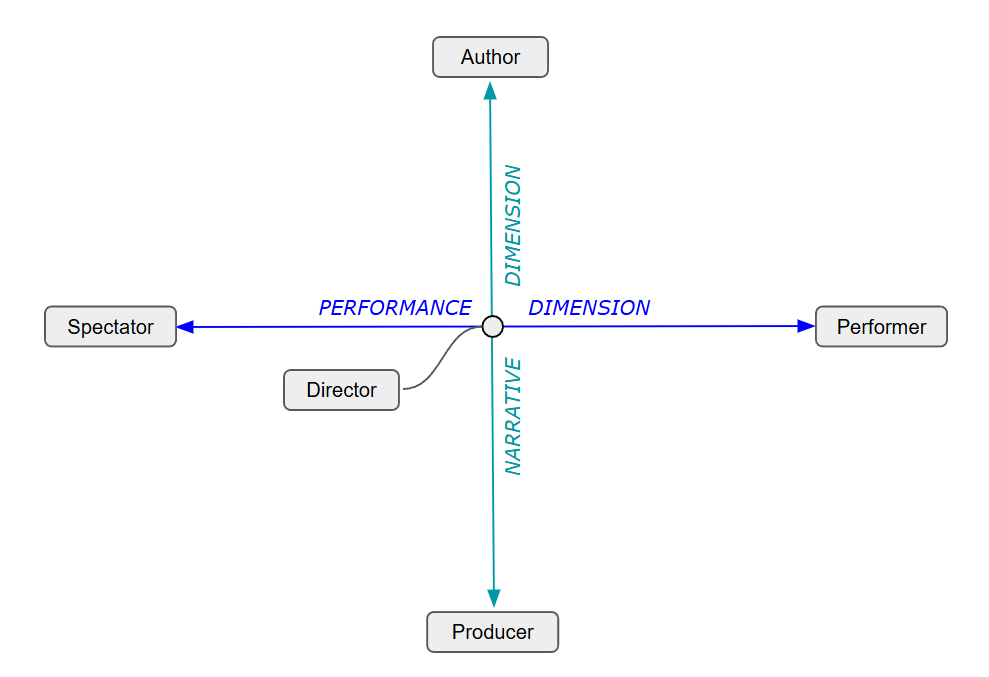
Figure 1: Dr. Wiener’s 1999 Dramaturgic Model
In the Dramaturgic Model the curtailment of range or activity on one or more role-functions results in a deficit in functioning, manifest in both improvising and life. The hypothesis indirectly explored in the article was whether both deficient improvising and deficient life functioning co-occur. If so, the case for the existence of these five posited role functions, as underlying causal factors, would be strengthened. Case examples compared elements of three clients’ life functioning with deficiencies in their improvising and found plausible though limited evidence of correspondence. However, no further research was subsequently undertaken to further test the hypothesis stated above.
This blog (far more modestly than the above-described Dramaturgic Model!) addresses the identification and classification of some Performance styles (repeatable patterns in the performances of client improvisers across different enactments). Performance styles undeniably exist, though there is no consensus either on their descriptions or their correspondence with life functioning.
While performance styles are detectable in first-time improv performers, their clinical significance only emerges from observation of patterns across a variety of performed enactments, particularly those featuring embodied dramatic roles. (Teachers of Stage Improvisers are in the same position as RfG therapists to observe performance styles, though their objective in intervening with their students is primarily to improve these students’ improvising skills). Typically, a therapist will have acquired a significant amount of data concerning the life patterns and problems of their clients by the time that these clients have been observed performing a number of different enactments. Knowledge of these client life patterns, in turn, is useful to RfG therapists in selecting or tweaking further improv offerings (see Proxy Scenes).
The categories of contrasting styles described below are not exhaustive, of course—the RfG practitioner-reader is encouraged to add to these.
Generalists and Specialists
This category has long been noted in the improv literature when applied to performance of status—it was articulated by Keith Johnstone in his 1981 book, Impro. Status Generalists are capable of assuming the full gamut of status positions, while Status Specialists have difficulty performing either the High one or the Low one.
The distinction between Generalists and Specialists comes down to those who both can and choose to assume all positions, versus those who are uncomfortable and unconvincing when performing at one end or the other of some trait continuum.
“Generalist/Specialist” may also be applied to many other traits which are on a spectrum, such as: Problem-Creators/Problem-Solvers; Law-Breakers /Law- Abiders; Crazies/Sane Folks; Pranksters/Straight-Men; Chaos-Makers/Organizers; etc. Common to all these polarities is an underlying Inhibition/Disinhibition dichotomy. Performance anxiety inclines clients toward inhibition, while the freedom from consequences offered by the playspace inclines them toward disinhibition.
Client Specialists can be coached to expand their role repertoires to play the full spectrum of positions, which often results in increasing interpersonal effectiveness in their social lives.
Breadth of Emotional Range
One of the long-stated goals of RfG therapy has been to facilitate the expansion of clients’ emotional range through enactment. However, when performed, improv enactments differ in displayed emotional expressiveness from both everyday life and from realistic stage dramas by featuring extreme, simplistic caricatures of emotional states, unlikely to be mistaken for nuanced, realistic affect. RfG performances, therefore, serve not as direct rehearsals for real-life emotive effectiveness but rather as an inhibition-breaking practice useful in overcoming emotional blocks. Coaching and directing client performers to consciously alter and display expressed emotion also results in heightening their awareness of making choices on the emotional dimension.
As a variable, breadth of emotional range underlies multiaxial spectra, akin on each emotion to Generalist-Specialist types. What is distinctive here is that many clients are quite capable of expressing most emotions full-range, yet display constricted affect when expressing just one pole of a specific emotion. The most frequently-encountered curtailments of emotional expressiveness range are of: Anger/Rage, Enthusiasm, Remorse, Fear, and Pride.
Avoiding vs. Escalating Interpersonal Conflict
Conflict is a basic ingredient of drama. Improv games are miniature dramas that seldom feel complete or interesting without conflict arising and being resolved. Improvisers whose characters consistently avoid conflict are attempting to cook without heat, both frustrating their fellow cook-performers and disappointing their diner-audiences.
Conflict Avoiders frequently block or cancel conflict-inducing offers from their scene partners who then have to improvise new offers in order to move the action/plot along.
At the other extreme, some improvisers appear addicted to instigating and escalating conflict so that their scenes often end without these conflicts resolving. Extending the cooking analogy, conflict Escalators are like chefs whose every dish has to be set aflame—initially visually spectacular, but limiting in the variety of resulting taste experiences. Conflict Escalators also create problems for their onstage scene partners, who may weary of always being saddled with the responsibility for finding resolutions with which to end their scenes.
Intellectual vs. Emotive Role Interpretation
‘Intellect’ refers to the presentation of ideas, expressed through words, formatted as explanation, description and/or reasoning. ‘Emotion’ refers to the presentation of values, expressed through bodily gestures and vocal tone. Both intellect and emotion are foundational to expressing meaning and are nearly always present together in performances of human characters, although it is possible for one to so predominate as to eclipse the other. Of the two, emotion is the more immediate and greater in its impact on an audience.
Improvisers often give emphasis to one (intellect or emotion) over the other in their presentation of a character. When such an emphasis is extremely skewed and is also consistently predominant across a variety of different character portrayals, then any future character interpretation by that improviser is more predictable and usually less interesting to all witnessing it. Such imbalance generally signals a deficit in the way that the improvising client functions in the social world as well.
Character Extroversion and Introversion
Client improvisers also differ from one another to the extent that they endow their characters with bold choices. For some, improvising becomes an accepted invitation to “cut loose;” clients whose social personas are cautious, withdrawn and/or literal may, startlingly, play characters who present as confrontational, witty and/or naughty. For many such clients there is a dual payoff from performing—they experience an expansive breakthrough whereby life opens up a world of new possibilities– and, additionally, receive social affirmation from appreciative audiences. Many a client improviser has gone on to make a hobby of performance improv based on an RfG initiation into the world of improv.
Parenthetically, such a transformation from, say, mild-mannered accountant to swashbuckling pirate can have strong effects on these clients’ witnessing family members, who will exclaim, “I didn’t know she had that in her!” Such feedback may itself set in motion family relationship change.
In contrast to the above-described clients, other clients’ characters may present as frozen/withdrawn/numb, prone to hesitations and seemingly oblivious to other players’ offers. Particularly in RfG group therapy, Post-Enactment Processing feedback from other group members often is more influential than that from the leader-therapist. Of those clients who are willing to improvise at all, the majority may accept such feedback and “open up,” by degrees, in subsequent performances.
Discussion
Descriptions of both the three clients’ improv performances and their lifestyle features can be found in the 1999 article—these clients’ contrasting performances of the same games may certainly be interpreted as their distinctive styles of play. Though intriguing as a proposed intervening variable, the existence of role-functions is, at present, more a matter of conjecture than fact. Notwithstanding the existence of Performance styles, their significance as indicators of offstage life functioning remains undecided. Two things appear plausible: (1) if clients are able to expand their performances to overcome stylistic limitations, even temporarily, it seems that “deficiencies in role-function” are either reversible features of the human psyche or that performance styles do not necessarily result from role-function deficiencies; and (2) that performance styles may be compensations for deficiencies in role-functions rather than indications of them.
An Invitation
As noted earlier, my presentation of Performance Styles is hardly exhaustive and largely subjective. I encourage others with relevant experience to share and compare their observations, questions and conclusions with the RfG community. To that end, I invite you to email me at: [email protected] with your contribution on this topic. Should there be a sufficient volume of correspondence I shall publish a synopsis of received feedback on the RfG website (www.rehearsalsforgrowth.com).
1 Wiener, D. J. (1999) Assessing interpersonal functioning… RfG Collected Papers, Vol. I, pp. 99-116

